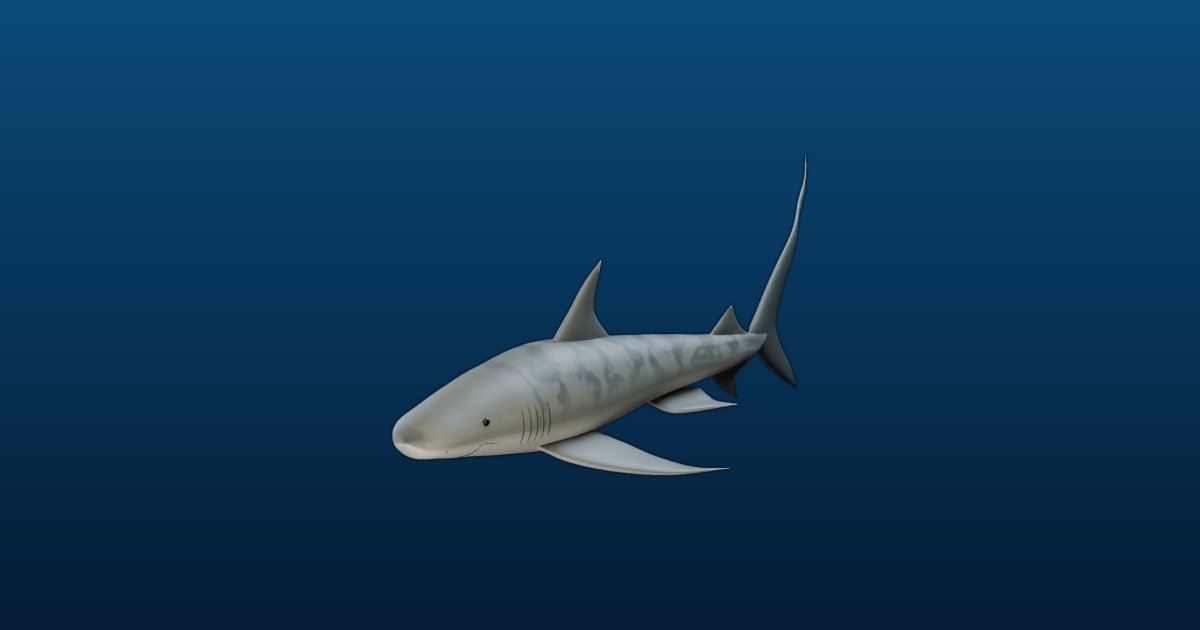
The Hulhumalé shark dive is a guided dive at the Hulhumalé Entrance, a channel minutes from Malé, where divers hold a fixed position on a stationary mooring line while tiger sharks, scalloped hammerheads, grey reef sharks, spinner sharks and a hundred-plus stingrays move around them. Raajje Divers pioneered the site and runs it as a full-day trip with full gear, an expert guide and a surface marshal.
At a glance
| Where | The Hulhumalé Entrance, minutes from Malé |
|---|---|
| Level | Advanced — tell us your certification and logged dives when you book |
| Length | Full day |
| Method | A stationary mooring line, developed on this site by Raajje Divers |
| Included | Full gear, the mooring-line set-up, an expert guide and a surface marshal |
| Best months for sharks | January to March |
| Price | See the current price on our Services page |
Who you will meet
| Species | Size | What to expect |
|---|---|---|
| Tiger shark | Up to 5 m | The headline encounter: a massive, striped apex predator — wary, intelligent, unmistakable in profile. |
| Scalloped hammerhead | Up to 4 m | The T-shaped silhouette, often glimpsed mid-water, cruising the channel along the current. |
| Grey reef shark | Up to 2 m | Often the most numerous, patrolling the reef edge and the channel walls. |
| Spinner shark | Up to 3 m | Slender and fast, fond of the open water above the channel. |
| Stingrays | Up to 2 m wingspan | A hundred and more on the sand, drawn by the runoff current — a cloud that rises and shifts beneath you. |
| Other visitors | Seasonal | Whitetip and blacktip reef sharks, large jacks, snapper schools and the occasional whale shark. |
These are wild animals following the current, so every dive is different — hammerheads in particular are seasonal and never guaranteed.
How the mooring-line method works
When you dive with large sharks, control is everything. We studied the Hulhumalé Entrance from its early days, long before it became known as a shark dive, and built up years of knowledge of its tides, currents and behaviour patterns. From that we developed a stationary method using mooring lines: divers stay anchored in a planned position, and the sharks come to them.
Position, depth and exposure are managed from start to finish. The system is designed around diver safety, proper positioning and responsible interaction — a structured, secure dive for the divers and a respectful one for the animals. A surface marshal stays with the boat throughout.
The sharks are threatened — the dive is built around that
Three of the headline species are on the IUCN Red List: the scalloped hammerhead is Critically Endangered, the grey reef shark Endangered and the tiger shark Near Threatened. That is why the dive runs on a planned profile, and why divers are asked never to chase or touch the animals. Read more in Diving doesn't have to cost the reef.
When to come
Our pick for sharks is January to March. That falls in the northeast monsoon (December to April), the dry season, when visibility often reaches 30 metres or more and the eastern channels are busy with hammerheads, grey reef sharks and big pelagics. The full picture, month by month, is in When to come: a month-by-month guide.
Who can do it
The shark dive is run as an advanced dive. If you are newer to diving, build up first with a two-tank reef dive or a PADI course — the PADI Advanced Open Water course adds deep and navigation dives and extends your limit to 30 metres.
Three tips from the crew
- Breathe slowly. Long, slow inhales and longer, slower exhales — your air lasts longer and you stay steady on the line.
- Stay still. Sharks keep a polite distance from divers who chase them. Hold your position and they come closer.
- Trust your guide. We dive these channels every week and know what the current is about to do before it does it.
How to book
Send us a message through the contact page, email info@raajjedivers.com, or call or WhatsApp +960 777 2822. Tell us your dates, your certification level and where you are staying — as a mobile dive base, we can also bring the dive to your resort, guesthouse or yacht.


